
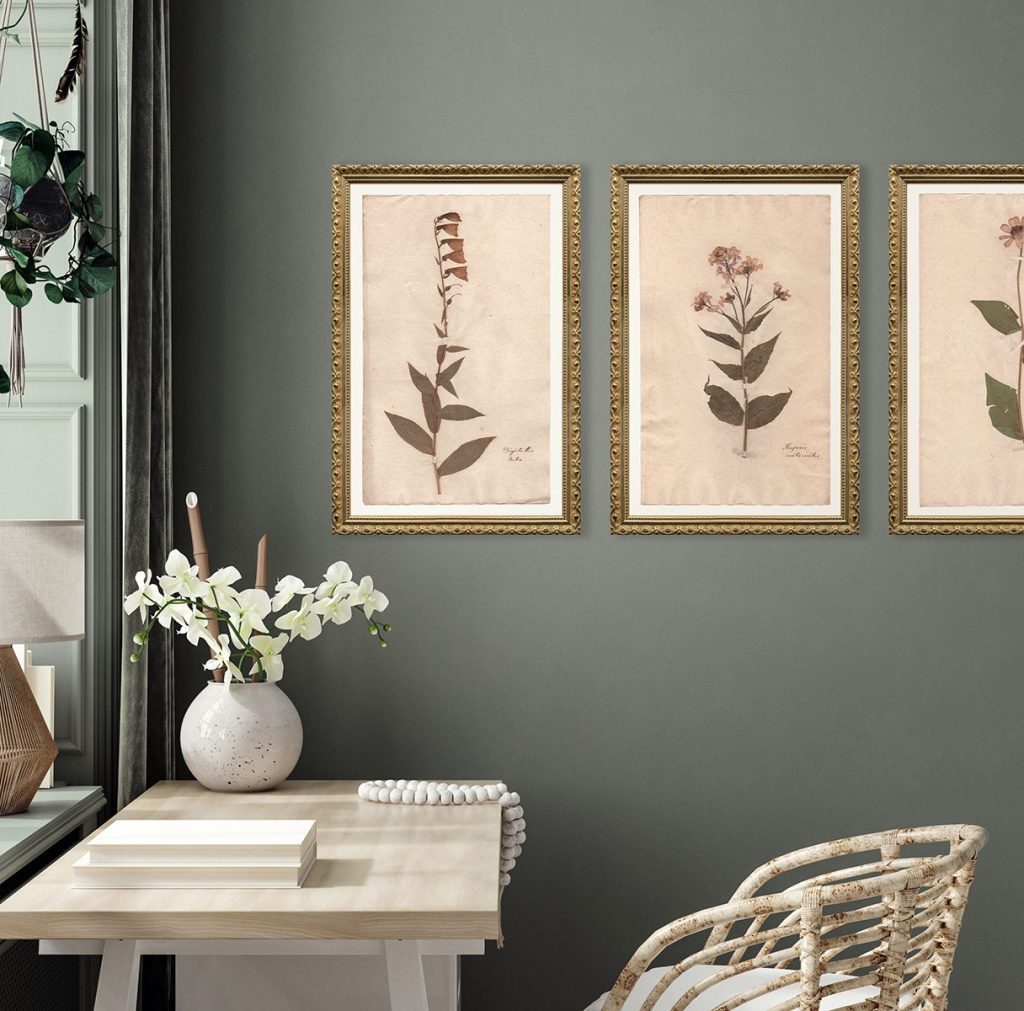
Historically, herbarium collections have had a profound influence on natural history art. There are several ways in which these collections have shaped and enriched the field of botanical illustration and natural history art.
Accurate Representation of Plant Species
Herbarium specimens provide artists past and present with physical references for studying plant morphology in detail. This enabled them to create accurate and scientifically correct illustrations. The use of herbarium specimens helped standardize botanical illustrations, ensuring that they accurately represented plant features like leaf shapes, flower structures, and root systems.
Herbarium collections allow scientists and artists to access exotic and rare plants. Often amassed from global explorations, these collections gave artists access to a wide variety of plant species, including exotic and rare ones that they might not have encountered otherwise. Illustrations based on these collections introduced the public and scientific community to the rich diversity of the plant kingdom, highlighting new and fascinating species from different parts of the world.
Botanical illustrations created with the aid of herbarium specimens served as educational tools for teaching botany and natural history. These artworks were used in textbooks, scientific journals, and educational displays. They provided clear visual guides for plant identification, which were particularly useful before the advent of modern photography.

Dog Rose from antique Herbarium Collection

Pheasant’s-eye from antique Herbarium Collection
Scientific Collaboration
Herbarium collections facilitated collaborations between botanists and artists. Botanists provided specimens and scientific insights, while artists used their skills to depict these plants accurately and aesthetically. Artists like Pierre-Joseph Redouté, known for his meticulous botanical illustrations, often worked closely with botanists and used herbarium specimens as references to ensure the accuracy of their work. James Edward Smith, botanist and writer, collaborated with James Sowerby, illustrator, in the creation of the massive 35-volume publication English Botany. Sowerby’s beautiful botanical illustrations can be purchased here.
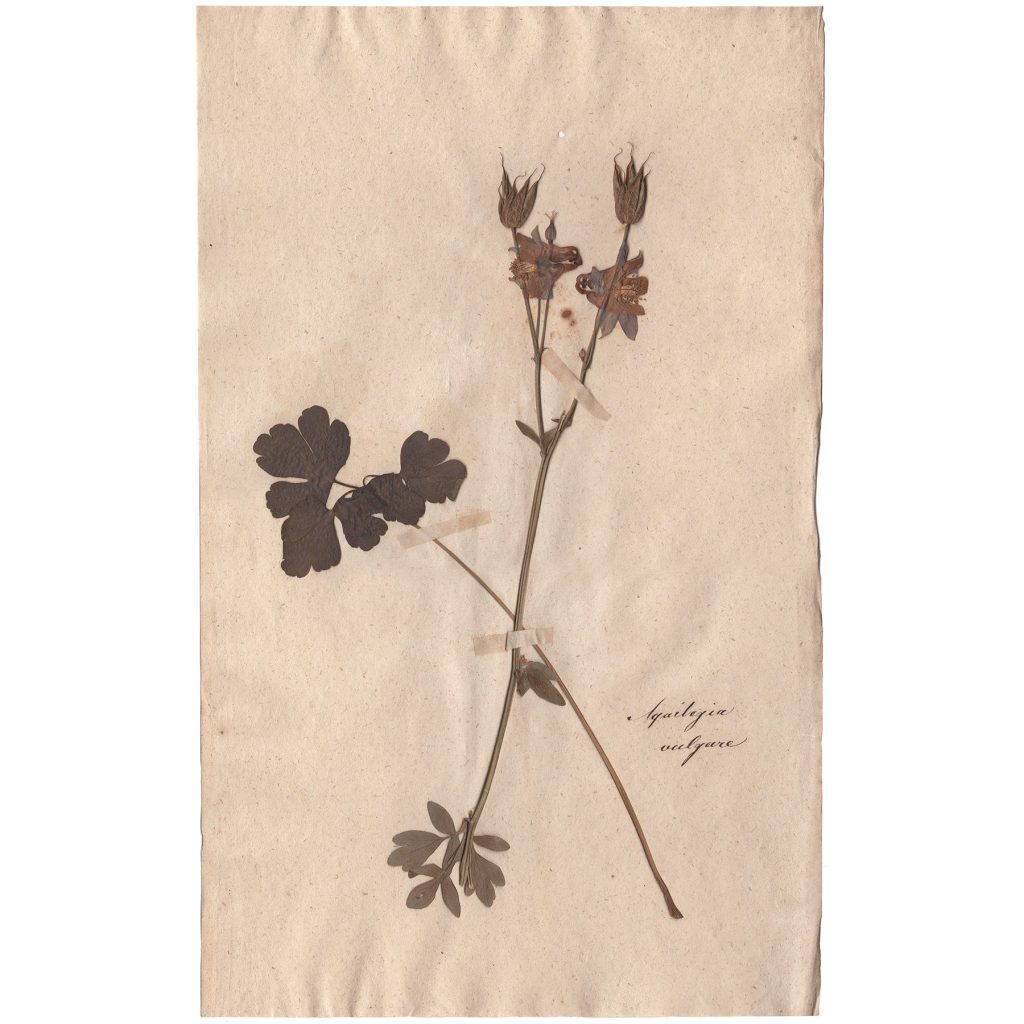
Common Columbine dried plant from 1790 – 1820
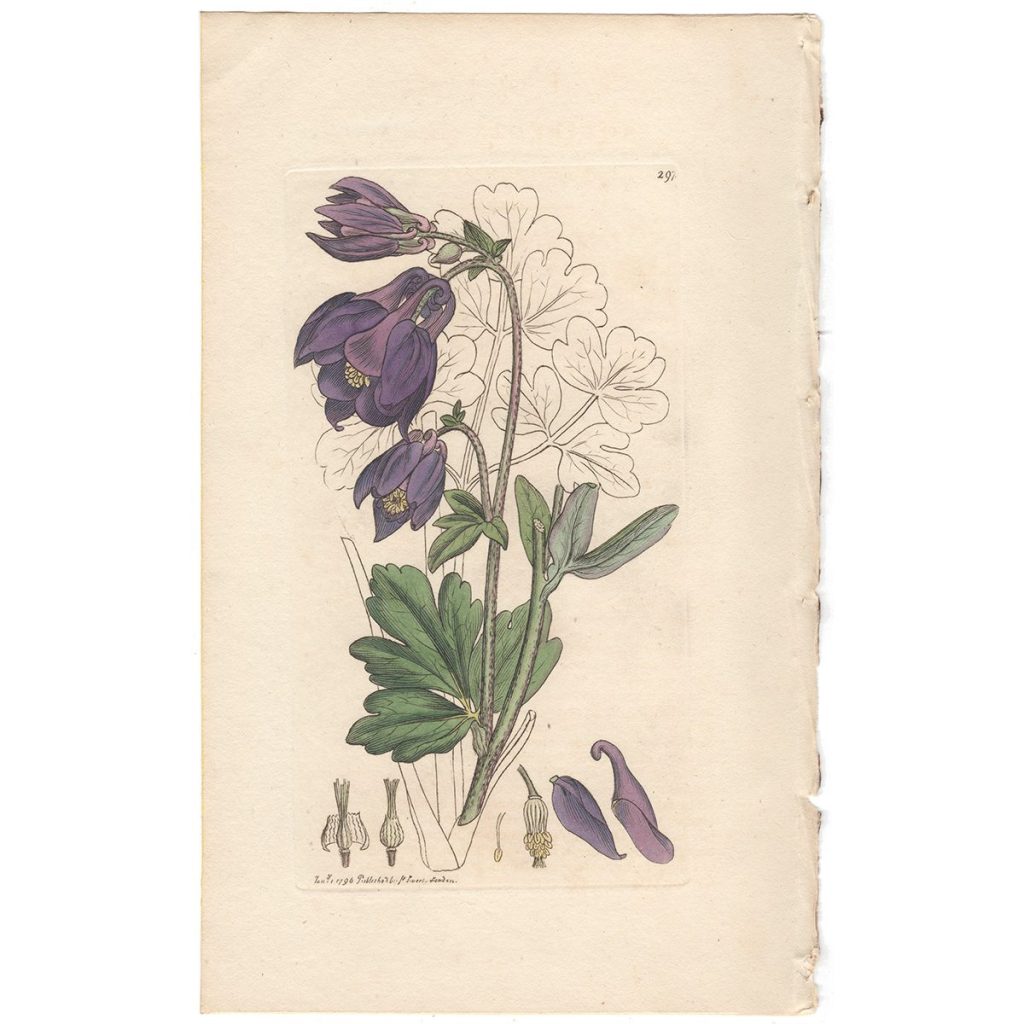
Plate 297 Common Columbine by James Sowerby, 1796
illustrations based on herbarium specimens documented botanical discoveries and the appearance of plants at specific points in history. These artworks serve as historical records of plant diversity and morphology. Botanical art helped preserve the knowledge of plant species. This knowledge might have been lost or significantly changed over time due to environmental changes or extinction.
Inspiration for Artistic Style
The detailed and precise nature of botanical illustrations influenced broader artistic styles. The realism and attention to detail required in botanical art inspired similar techniques in other genres of natural history art. Botanical illustrations contributed to art movements such as the Arts and Crafts Movement. This movement emphasized the beauty of natural forms and intricate details.
Books and publications featuring botanical illustrations, such as floras and monographs, often used herbarium specimens as primary references. These illustrated works disseminated botanical knowledge widely. Botanical illustrations captured the public’s imagination and interest in plants. This interest fostered a greater appreciation for botany and natural history among non-scientists.
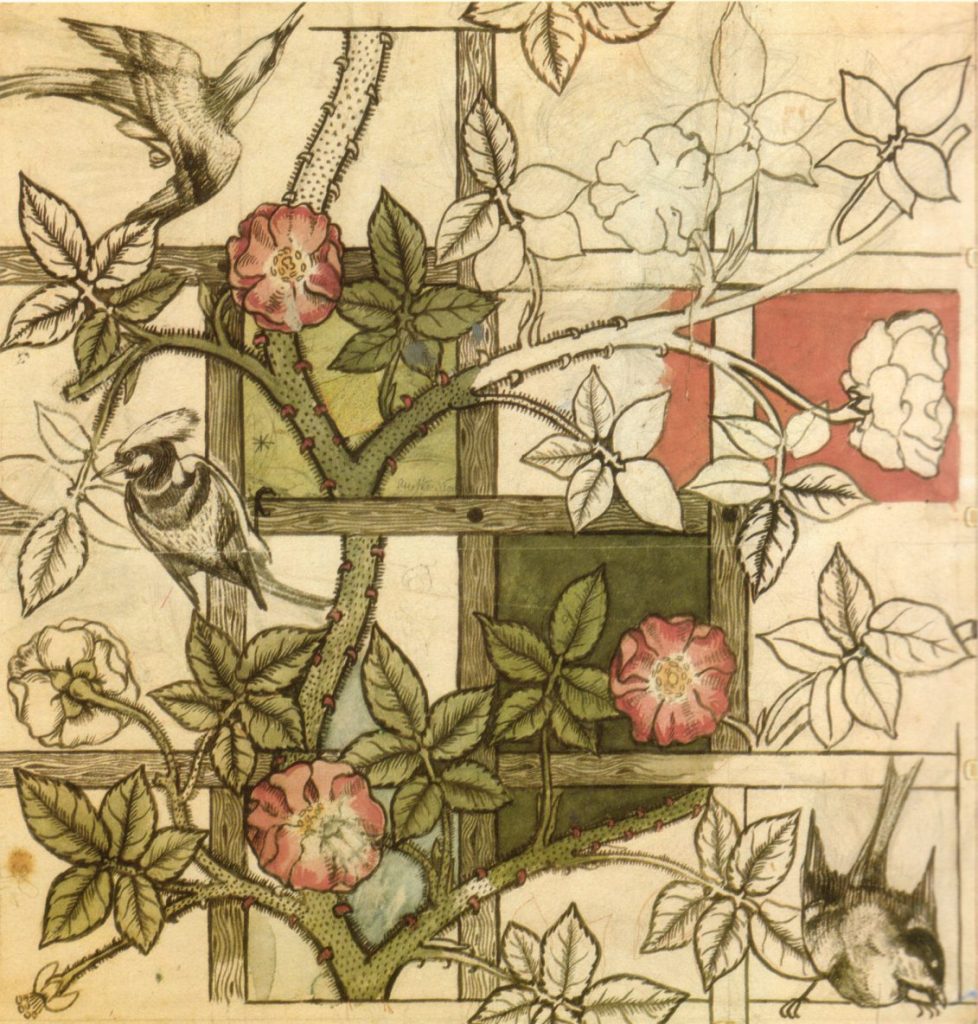
Arts and Crafts Movement designer William Morris created this Trellis wallpaper in 1862
Advancements in Printmaking
Advances in printing technologies, such as lithography, allowed for the mass production of botanical illustrations. Herbarium specimens ensured these illustrations remained scientifically accurate despite the increased production scale. Artists developed techniques to accurately depict the colors and textures of plants, and often cross-referencing live specimens with herbarium samples to achieve realistic results.
In essence, herbarium collections have deeply influenced natural history art by providing accurate references for detailed illustrations. As well as facilitating global plant knowledge exchange, inspiring artistic styles, and helping document and disseminate botanical discoveries. These collections have bridged the gap between science and art. The enrichment of both art and science contributes to our understanding and appreciation of the natural world.