
The history of women in botanical illustration is a fascinating journey that intertwines with the broader narratives of art, science, and women’s roles in society. While the contributions of women to botanical illustration have often been overlooked or overshadowed by their male counterparts, their impact on the field is significant.
The Renaissance Period
In the early days of botanical illustration, during the Renaissance period, women faced significant barriers to participation in art and science. However, some women managed to overcome these obstacles and made noteworthy contributions. One such example is Giovanna Garzoni, an Italian painter known for her exquisite botanical illustrations during the 17th century.
The Golden Age of Natural History
During the 18th and 19th centuries, botanical illustration flourished as scientific exploration expanded. Women played pivotal roles in documenting the plant species encountered during expeditions to distant lands. One of the most prominent figures from this era is Maria Sibylla Merian, a German naturalist and illustrator whose detailed renderings of plants and insects are celebrated for their scientific accuracy and artistic beauty.
As the field of botany evolved, so did the role of women in botanical illustration. The 19th century saw the emergence of botanical art as a legitimate form of artistic expression, with women playing a central role in its development. Artists like Beatrix Potter, famous for her children’s books, also contributed to botanical illustration, showcasing a diverse range of talents among women in this field.
Spotlight on a Pioneer: The Remarkable Work of Anne Pratt
Anne Pratt (1806–1893) was a distinguished English botanical illustrator and author, celebrated for her significant role in popularizing botany during the 19th century. Despite enduring health challenges that limited her ability to explore nature firsthand, Pratt created an extensive body of work that made botanical knowledge more accessible to the general public, especially women and children.
Born in Strood, Kent, Anne Pratt developed a deep interest in botany at an early age. Her fragile health often kept her indoors, but she compensated by studying plants brought to her and collaborating with botanists who provided her with specimens and detailed descriptions.
Largely self-taught in both art and botany, Pratt developed a distinctive style that seamlessly blended scientific accuracy with artistic beauty. Her work was widely appealing, making complex botanical concepts accessible to a broad audience. Pratt’s contributions were instrumental in making the study of plants more approachable for amateurs and the general public. She wrote in an engaging and accessible style, pairing her text with detailed illustrations that helped readers identify and appreciate the plants around them.

Anne Pratt’s Landmark Work: Flowering Plants
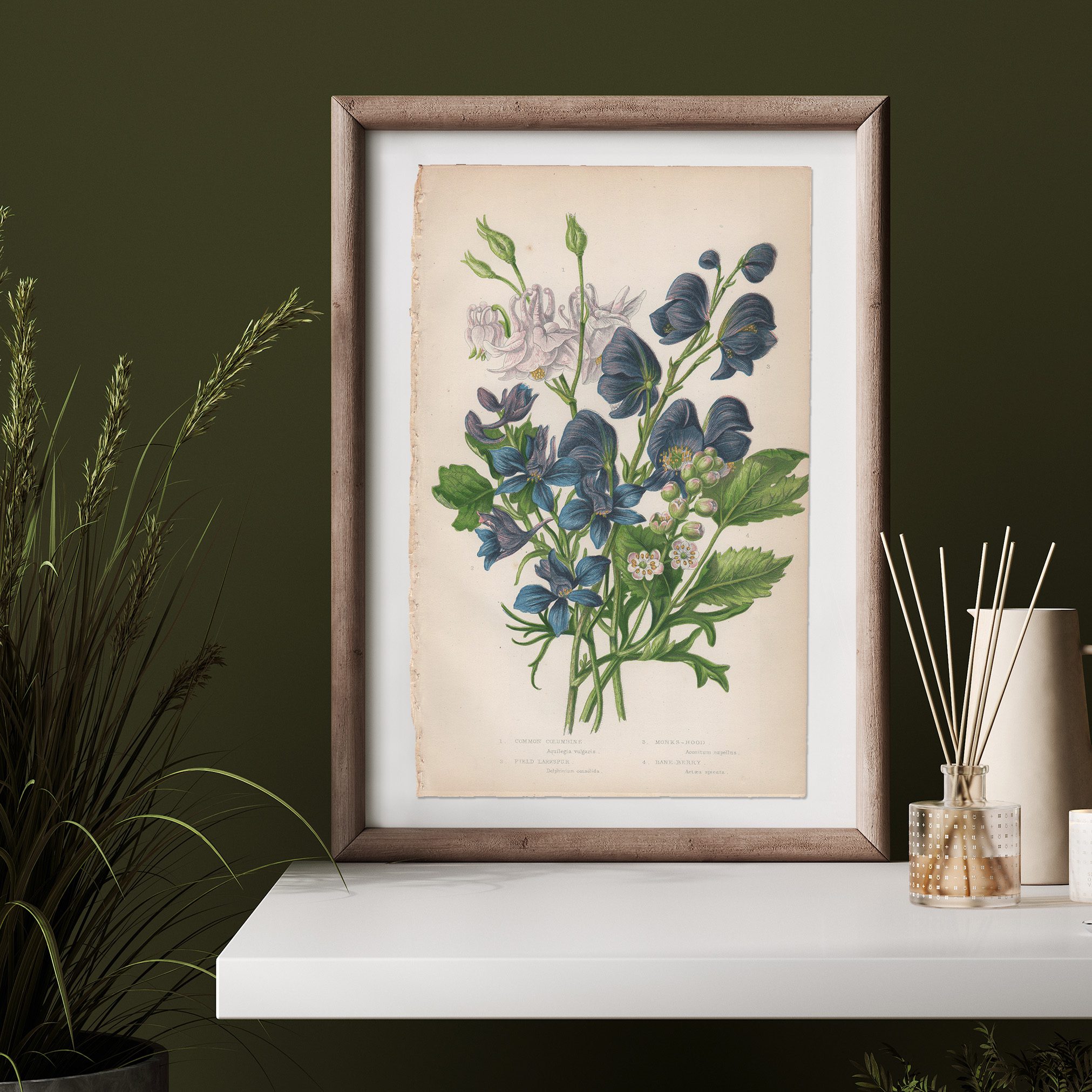
The Flowering Plants, Grasses, Sedges, and Ferns of Great Britain and their Allies, the Club Mosses, Horsetails, etc. was first published between 1855–1873. This work was published in multiple volumes, with the exact number varying by edition. It covered a wide range of British flora, including flowering plants, grasses, sedges, ferns, and related species. The publication featured over 300 hand-colored plates, each depicting multiple plant species. The accompanying text provided detailed descriptions of the plants, their habitats, and their uses, blending scientific knowledge with practical information.
Flowering Plants became a beloved reference in Victorian England, praised for its accessibility and the beauty of its illustrations. It became a staple in many households and was widely used as an educational tool in schools. The success of this work established Anne Pratt as one of the most influential botanical illustrators of her time.
Anne Pratt’s work continues to be appreciated today for its artistic merit and its role in making botanical knowledge accessible to a wider audience. Her illustrations remain a valuable resource for botany enthusiasts, and her contributions are recognized as pivotal in the history of natural history illustration.
Contemporary Botanical Illustration
In the 20th century, advancements in technology, such as color printing and photography, transformed botanical illustration. While these innovations offered new opportunities, they also posed challenges to traditional methods of illustration. However, women continued to make significant contributions, adapting to new techniques and mediums while preserving the tradition of botanical art.
Today, women continue to play a vital role in botanical illustration, blending artistry with scientific accuracy to document and celebrate the beauty of the natural world. Organizations and societies dedicated to botanical art provide platforms for women to showcase their talents and contribute to the ongoing legacy of botanical illustration.
Overall, the history of women in botanical illustration is a testament to their resilience, creativity, and passion for both art and science. Despite facing numerous obstacles throughout history, women have made enduring contributions to this field, enriching our understanding and appreciation of the botanical world.